Chess Setup: The Essential Guide to Starting the Game Correctly

Chess is a game defined by structure, discipline, and strategic balance. Before any strategy can unfold or any combination can be played, the game must begin with a correct and standardized setup. Chess setup is the foundation of fair play, ensuring both players start with identical resources and equal opportunity. Whether played casually or in professional tournaments, proper chess setup is essential to the integrity of the game.
The Standard Chessboard
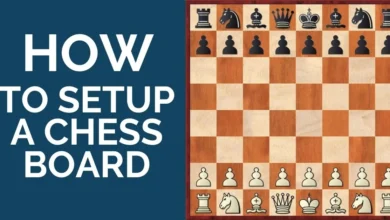
A chess game is played on an eight-by-eight board consisting of 64 alternating light and dark squares. The board must be placed so that each player has a light-colored square in the bottom-right corner. This orientation is critical because it determines the correct placement of the queen and king and preserves the symmetry of the board.
The board is divided into ranks and files. Ranks run horizontally and are numbered from one to eight, while files run vertically and are labeled from a to h. This grid system forms the basis for move notation and positional understanding throughout the game.
Correct Orientation of the Board
Before placing any pieces, players must ensure the board is properly oriented. The rule of “light square on the right” applies to both players. If the board is turned incorrectly, the entire setup becomes flawed, leading to reversed piece placement and an invalid game.
In official competitions, players are expected to check the board orientation before starting the clock. This simple step prevents confusion and maintains consistency with international chess standards.
Pawn Placement
Each player begins with eight pawns. Pawns are placed on the second rank for White and the seventh rank for Black, occupying all eight files. These pawns form a barrier in front of the major and minor pieces, shaping the early phase of the game.
Pawn placement is crucial because pawns define the initial structure of the position. They control central squares and determine the flow of development. A correctly set pawn structure allows standard opening principles to be applied effectively.
Rook Placement
Rooks are placed on the corner squares of the board. White rooks start on a1 and h1, while Black rooks begin on a8 and h8. Rooks are powerful long-range pieces, and their starting positions in the corners support castling and future control of open files.
Correct rook placement is essential for enabling castling, a move that improves king safety and connects the rooks. Misplacing rooks can disrupt this fundamental aspect of chess strategy.
Knight Placement
Knights are placed next to the rooks, on the b and g files of the back rank. Each player has two knights, and their initial placement allows for flexible development toward the center.
Knights are unique because they can jump over other pieces. Starting them in the correct positions ensures balanced options for early development and supports standard opening strategies.
Bishop Placement
Bishops are placed next to the knights, occupying the c and f files on the back rank. Each player begins with one light-squared bishop and one dark-squared bishop.
This placement ensures control over both color complexes on the board. Bishops often play a key role in controlling long diagonals, and their correct starting squares are vital for maintaining strategic balance.
Queen and King Placement
The queen and king are placed in the center of the back rank. The queen is always placed on the square that matches her color. The white queen starts on d1, and the black queen starts on d8.
The king is placed on the remaining square next to the queen, starting on e1 for White and e8 for Black. This arrangement is critical for castling and overall king safety. Reversing the king and queen is a common beginner mistake that results in an incorrect setup.
Importance of Chess Setup in Competitive Play
In tournament chess, correct setup is a formal requirement. Players are responsible for ensuring that the board and pieces are arranged correctly before the game begins. An incorrect setup can lead to penalties or the game being restarted.
Accurate setup also ensures that established opening theory applies correctly. Since many openings rely on precise starting positions, even minor errors can alter the nature of the game and compromise its fairness.
Common Setup Errors
One of the most frequent mistakes in chess setup is incorrect board orientation. If the board is rotated incorrectly, the queen and king will be placed on the wrong squares. Another common error is placing the queen on the wrong color square.
Beginners may also confuse the placement of bishops and knights. Taking a moment to verify each piece’s position helps prevent these mistakes and ensures a proper start.
Teaching Chess Setup to Beginners
Chess setup is often one of the first lessons taught to new players. Learning how to set up the board correctly reinforces understanding of the game’s structure and builds good habits. Coaches and instructors emphasize repetition and visualization to help beginners memorize piece placement.
Teaching setup also encourages discipline and attention to detail, qualities that are essential for success in chess and other competitive activities.
Chess Setup in Digital Play
While online chess platforms automatically arrange the board, understanding proper chess setup remains important. Knowledge of setup helps players visualize positions, analyze games, and transition smoothly between digital and over-the-board play.
For players who aspire to compete in tournaments, mastering physical board setup is a necessary skill that complements online training.
Conclusion
Chess setup is the cornerstone of every chess game. Proper board orientation and precise piece placement ensure fairness, consistency, and strategic integrity. From casual play to professional competition, understanding chess setup is essential for players at every level.
By mastering the fundamentals of chess setup, players create the conditions needed for meaningful competition and strategic depth. A correctly set board allows the game to unfold as intended, honoring the traditions of chess while preparing players for thoughtful and competitive play.

One Comment